
Pathum Thani, Thailand — The Master’s Program in Biomedical Engineering at Universitas Airlangga actively participated in RSUCON 2026, held at Rangsit University on 1 May 2026. The international conference brought together researchers, academicians, innovators, undergraduate and postgraduate students, as well as young researchers from various countries to present scientific findings, foster interdisciplinary collaboration, and discuss emerging developments in science, technology, healthcare, and artificial intelligence.
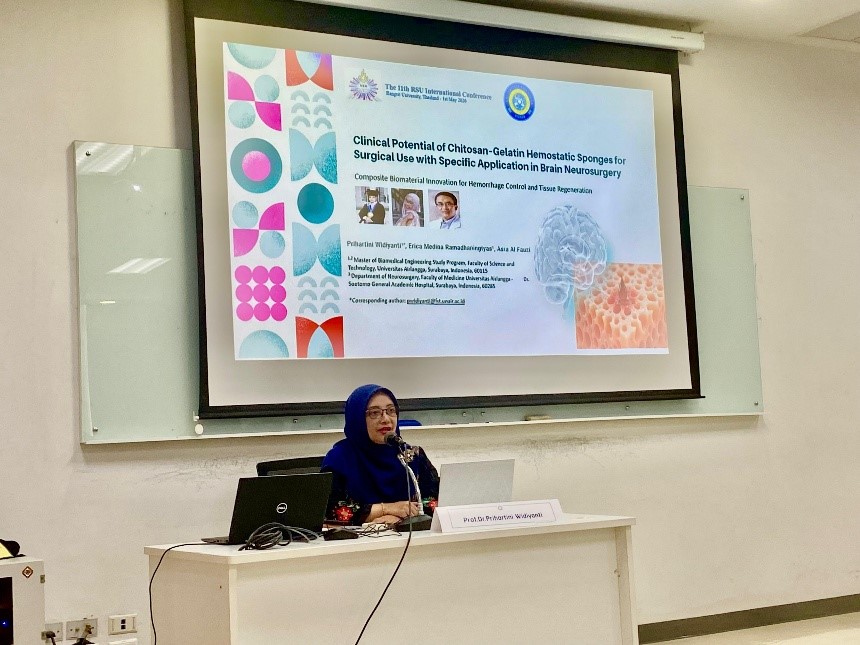
The Universitas Airlangga delegation attended under the guidance of Prof. Dr. Prihartini Widiyanti, Head of the Master’s Program in Biomedical Engineering, who also served as one of the keynote speakers at the conference. Her keynote presentation on biomaterial innovation and neurosurgical applications reflected the growing international recognition of Universitas Airlangga’s research contributions in biomedical engineering and regenerative medicine.
RSUCON 2026 featured a total of 145 research papers – comprising 62 papers in Science and 83 in Arts and Social Sciences – with participants from Indonesia, Thailand, South Korea, China, Singapore, Australia, the Philippines, India, Bhutan, Vietnam, and several other countries. The Master’s Program in Biomedical Engineering at Universitas Airlangga reaffirmed its commitment to international research collaboration and scientific innovation through active participation in RSUCON 2026, held at Rangsit University on 1 May 2026. The conference served as a prominent international academic platform that gathered researchers, academicians, innovators, healthcare professionals, and postgraduate students from various countries.
Participation in the conference represented a significant milestone for the Biomedical Engineering Master’s Program, particularly in strengthening its visibility within the international scientific community. The delegation from Universitas Airlangga attended under the guidance of Prof. Dr. Prihartini Widiyanti, DDS, M.Health, Bach. of Biology, CCD, Head of the Master’s Program in Biomedical Engineering, Faculty of Advanced Technology and Multidiscipline, who was also invited as one of the keynote speakers at the conference. The participation of Universitas Airlangga delegation based on the honorary invitation from the College of Biomedical Engineering (BME), Rangsit University, Thailand, and the collaborative partnership established between four academic peers from Rangsit University Assoc. Prof. Nuntachai Thongpance (Dean of the College of BME, Rangsit University), Assoc. Prof. Dr. Nuttapol Tanadchangseang (D.Eng.), Asst. Prof. Dr. Sani Boonyagul (Ph.D.) ( Vice Dean of International Affairs) , and Dr. Tanate Angsuwatanakul (D.Eng.) and Prof. Dr. Prihartini Widiyanti, DDS, M.Health, Bachelor of Biology, CCD, as the Coordinator of the Master Program in Biomedical Engineering, Faculty of Science and Technology, Universitas Airlangga.
“Her participation highlighted the growing international recognition of Universitas Airlangga’s contributions to biomedical engineering research, biomaterials, tissue engineering, and healthcare innovation.”
RSUCON 2026 brought together a broad spectrum of scientific and scholarly disciplines, including Biomedical Engineering, Medicine, Biotechnology, Artificial Intelligence, Pharmacy, Digital Technology, Education, Communication Arts, Business, and Social Sciences. The conference attracted participants from numerous countries across Asia and beyond, including Indonesia, Thailand, South Korea, China, Singapore, Australia, the Philippines, Bhutan, Vietnam, Myanmar, and India. As an international academic forum, RSUCON 2026 emphasized the importance of interdisciplinary approaches in addressing modern global challenges, particularly those related to healthcare, artificial intelligence, sustainable technologies, and educational transformation. For students and researchers from the Biomedical Engineering Master’s Program, the conference provided an opportunity to present research findings, engage directly with international experts, establish professional networks, and gain exposure to current global research trends.
The academic proceedings of RSUCON 2026 commenced with an official opening ceremony attended by researchers, academicians, institutional representatives, and students from various international universities. The opening remarks were delivered by Dr. Nares Pantaratorn, Vice President for Research at Rangsit University, followed by a welcoming address from Dr. Arthit Ourairat, President of Rangsit University. Both speakers emphasized the importance of global academic cooperation, interdisciplinary innovation, and the role of higher education institutions in advancing research that addresses contemporary societal and technological challenges.
The first plenary lecture was delivered by Professor Kim Cheorl-Ho from South Korea, entitled “Revisited Cellular Behavior, Glycans Beyond Nucleic Acids and Proteins, and Functional Products in AI Era.” The presentation explored the evolving understanding of glycobiology and cellular behavior within the broader context of artificial intelligence-driven scientific advancement.
The second plenary session was presented by Professor Pauline Jones from Australia, addressing the rapidly evolving integration of generative artificial intelligence in education and academic practice. The session examined both the opportunities and challenges associated with implementing AI technologies in higher education, research methodologies, and teaching practices.
“Prof. Dr. Prihartini Widiyanti’s keynote on Chitosan–Gelatin Hemostatic Sponges demonstrated the clinical potential of biomaterial engineering in improving patient safety during delicate neurosurgical procedures.”
An especially significant moment for the Universitas Airlangga delegation was the keynote presentation delivered by Prof. Dr. Prihartini Widiyanti, DDS, M. Health, Bach.of Biology, CCD – the coordinator of Master Program of Biomedical Engineering from Faculty of Science and Technology Universitas Airlangga. Her lecture highlighted the clinical potential of chitosan–gelatin-based hemostatic sponges as innovative biomaterials capable of improving bleeding control during surgical interventions, particularly in delicate neurosurgical operations. Her contribution not only demonstrated the scientific strength of Universitas Airlangga in biomedical innovation, but also reinforced the university’s growing international academic reputation.
Beyond the formal presentations, RSUCON 2026 fostered an intellectually vibrant atmosphere characterized by active scientific discussion, interdisciplinary dialogue, and cross-cultural interaction. Participants engaged in discussions concerning artificial intelligence applications, machine learning in healthcare, biomaterials, regenerative medicine, computational biomedical systems, and emerging medical technologies.
In addition to attending plenary and keynote sessions, the delegation from the Master’s Program in Biomedical Engineering at Universitas Airlangga actively contributed to the scientific programme of RSUCON 2026 through several research presentations. The presentations reflected the programme’s growing research engagement in artificial intelligence, biomaterials, tissue engineering, regenerative medicine, and healthcare technology innovation.
Her keynote lecture highlighted advanced developments in biomaterials and tissue engineering for surgical and neurosurgical applications. The presentation emphasized the clinical potential of chitosan–gelatin-based hemostatic sponges in improving bleeding control during delicate surgical procedures and demonstrated the important role of regenerative biomaterials in enhancing patient safety and surgical outcomes.
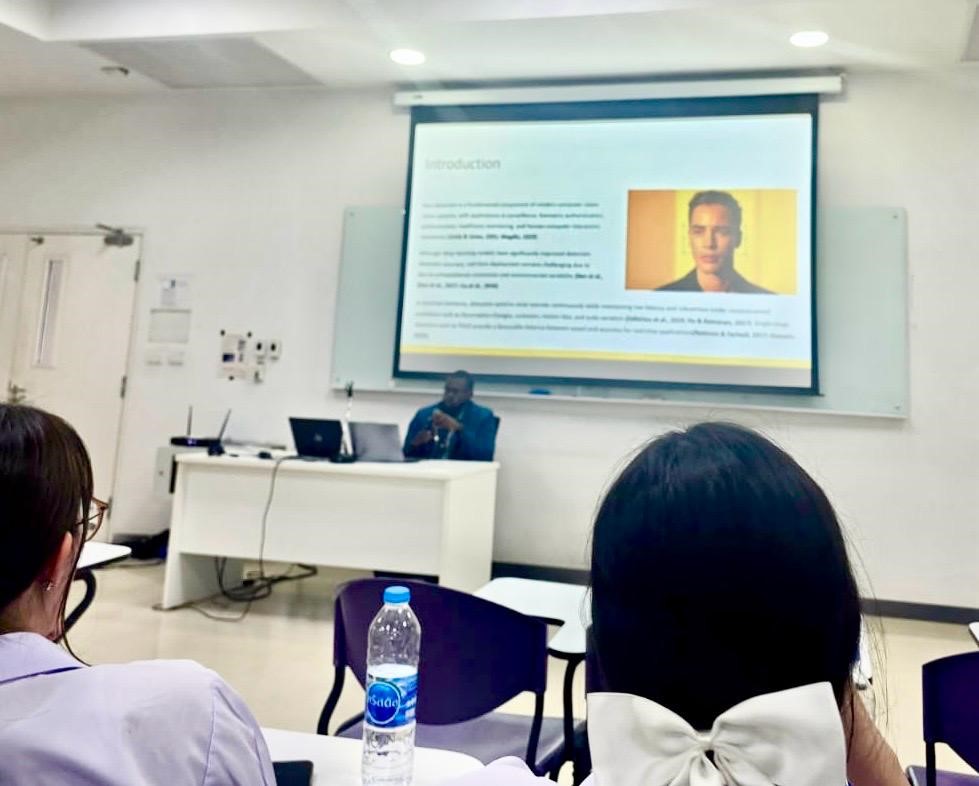
The study examined the practical deployment capabilities of computer vision systems in dynamic real-world environments, with particular emphasis on detection accuracy, processing efficiency, and operational stability. The research highlighted the increasing relevance of artificial intelligence and deep learning technologies in biomedical engineering applications, including intelligent healthcare systems, patient monitoring, and real-time medical imaging support.
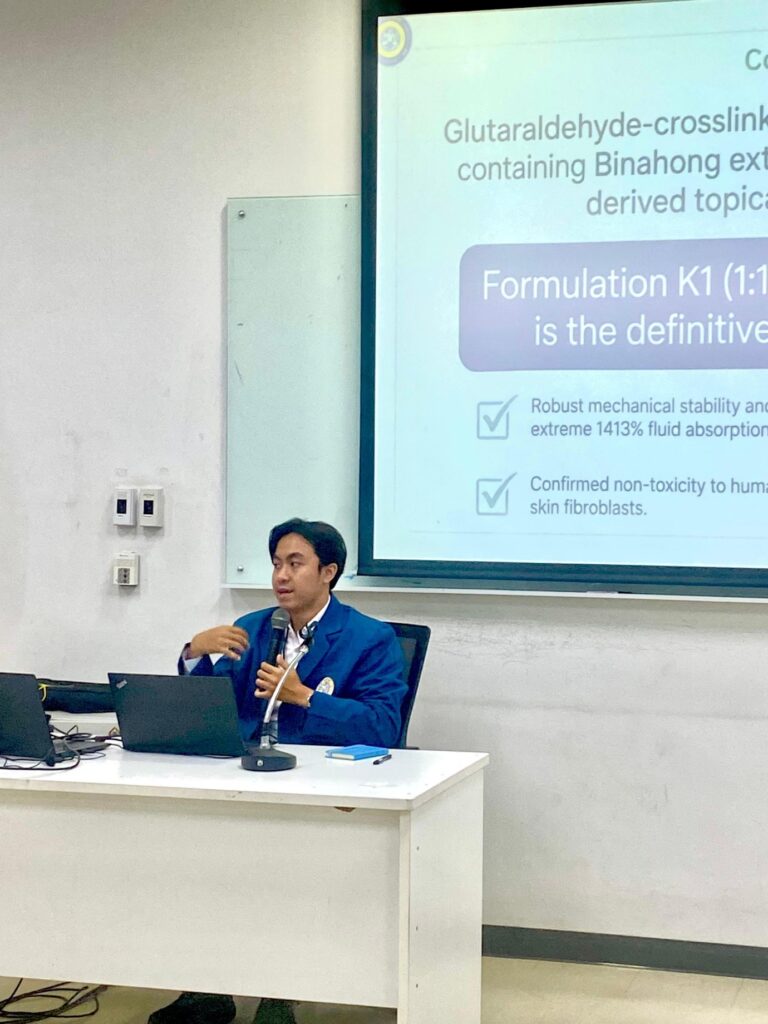
The study emphasized the integration of natural biomaterials and herbal extracts in developing innovative wound-care and bleeding-control technologies. The research demonstrated how interdisciplinary biomedical engineering approaches can contribute to safer and more effective healthcare solutions, particularly in regenerative medicine and biomaterial engineering.
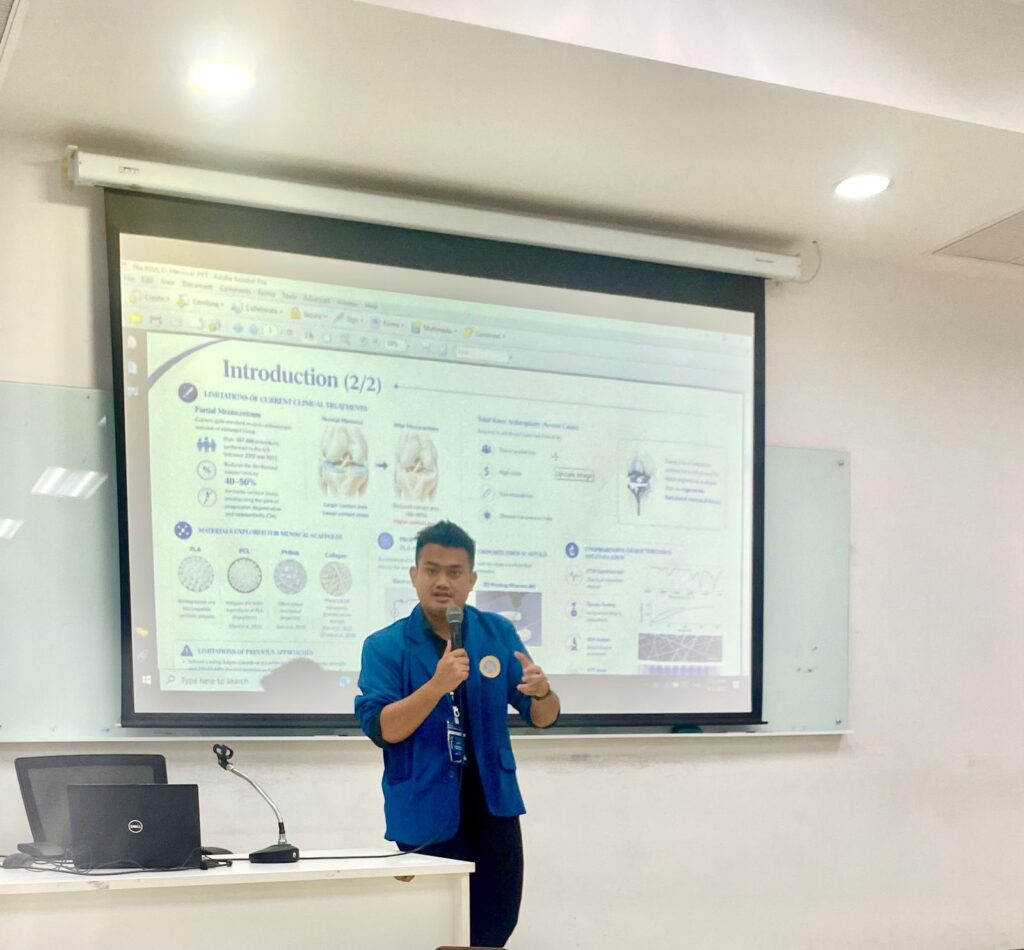
The study explored the fabrication and biomedical potential of multilayer composite fibers as scaffold candidates for meniscal tissue regeneration, further highlighting the programme’s research engagement in regenerative medicine and biomaterial innovation.
Beyond formal presentations, the conference served as an important platform for academic networking and professional interaction. Researchers and students were able to engage directly with experts from different countries and institutions, exchange research perspectives, and discuss potential future collaborations.
The participation of the Master’s Program in Biomedical Engineering at Universitas Airlangga in RSUCON 2026 reflected more than attendance at an international conference; it represented a strategic effort to strengthen international academic collaboration, expand scientific engagement, and promote the global visibility of the programme’s research contributions. Through active involvement in scientific presentations, academic discussions, and networking activities, the delegation demonstrated the programme’s commitment to participating in the rapidly evolving global biomedical engineering landscape.
The conference highlighted how biomedical engineering continues to emerge as one of the most transformative interdisciplinary fields in modern science. Discussions throughout the event repeatedly emphasized the integration of artificial intelligence, machine learning, biomaterials, regenerative medicine, computational systems, and healthcare technologies in addressing contemporary medical challenges.
The presence of Prof. Dr. Prihartini Widiyanti, DDS, M.Health, Bach.of Biology, CCD as a keynote speaker also carried significant institutional importance. Her contribution demonstrated the capability of Indonesian researchers to participate meaningfully in global scientific discourse and positioned Universitas Airlangga as an active contributor to international biomedical engineering research. Her leadership and mentorship throughout the conference further inspired students to pursue high-quality research with broader societal and clinical impact.
Moreover, the conference created opportunities to establish potential academic partnerships and future collaborative initiatives with researchers and institutions from various countries. International conferences such as RSUCON 2026 play a crucial role in fostering collaborative networks that may lead to joint research projects, student exchanges, interdisciplinary innovation, and future scientific publications.
The experience also reinforced the importance of scientific adaptability in the era of rapid technological transformation. Many conference sessions addressed the growing role of artificial intelligence and digital systems in healthcare, research, and education – underscoring the necessity for biomedical engineering researchers to continuously develop interdisciplinary competencies that combine technical expertise with clinical understanding and computational innovation.
WRITTEN BY
Nabil Abdulkarim Ishaq
Master’s Program in Biomedical Engineering Universitas Airlangga